Field guide / 03 / Mobile tool storage
Bring the Tool Cabinet Along
Put the tools where the work happens, then give them a reliable route home. The goal is fewer interruptions, not the greatest possible number of drawers.
Organize around a task, not a collection
Start by listing the tools used together during one familiar job. A bicycle repair station might need hex keys, sockets and small-parts trays. A joinery station might need marking tools, clamps and drill accessories. Grouping by task can save more movement than sorting every tool strictly by category.
Watch where your hands naturally reach while working. Frequently used light items belong in accessible positions; heavier tools generally belong lower down, within the cabinet’s stated limits. Keep sharp edges covered and small parts contained so movement does not turn a neatly arranged drawer into a mixed pile.
Allow the storage system to change. Removable dividers and labeled trays are easier to adjust than elaborate fitted compartments. Before cutting custom inserts, work through several projects using a temporary arrangement. The tools you imagined using every day may not be the ones you actually reach for.
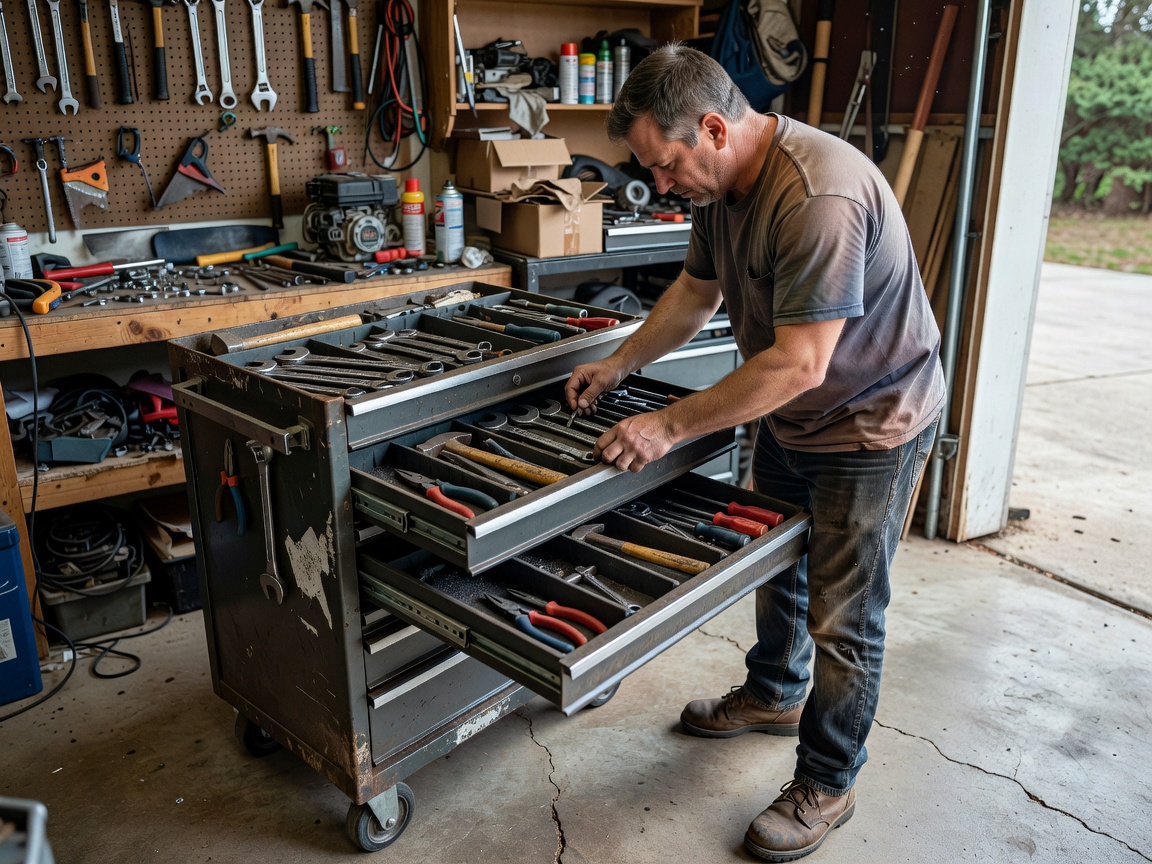
Make drawer access part of the layout
A cabinet can fit into a parking space yet fail as a workstation. Open a drawer fully and add room for your body in front of it. Check whether a neighboring bench blocks the handle or whether the open drawer intrudes into the route used to carry material.
Drawer extension changes the center of gravity. Follow the cabinet manufacturer’s instructions, use an appropriate anti-tip system where specified and open only one drawer at a time. A homemade cabinet does not become safe merely because the drawers are shallow. Its base, loading pattern, slide geometry and restraint method all need consideration.
Do not use an open drawer as a temporary shelf, step or handle. Keep the top clear enough that moving the cabinet does not carry loose tools toward an edge. If a top is intended for occasional assembly, check that this use is compatible with the cabinet design rather than treating the storage unit as a substitute for a stable bench.
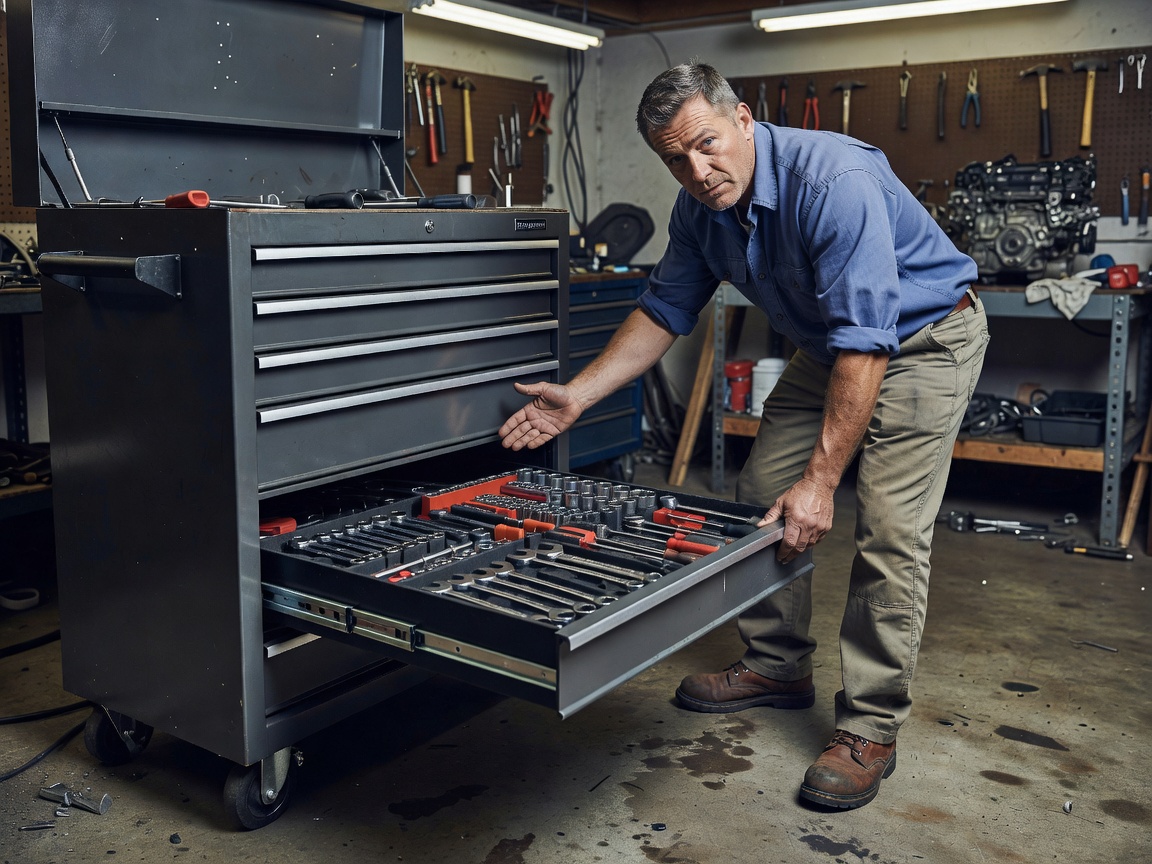
Choose a cabinet structure that can travel
Adding wheels to a fixed cabinet changes how forces enter the structure. A domestic carcass designed to sit continuously on a floor may not tolerate loads concentrated at caster corners. A purpose-built mobile base needs a suitable bottom assembly, rigid connections and wheel mounts designed for the complete loaded mass.
Drawer-slide ratings are conditional. Length, mounting orientation, fasteners, drawer width and load distribution can affect performance. Consult the slide manufacturer’s documentation for your configuration. Blum, Accuride and Häfele are examples of real hardware suppliers with product-specific information; mentioning them here is not a recommendation or evidence that any particular product suits your build.
Handles also need a structural connection. Push from the designated handle at a controlled walking pace rather than pulling from a drawer front. Close and latch drawers before moving, disconnect external leads and secure loose contents. Avoid slopes and abrupt thresholds; get suitable assistance for heavy units instead of trying to catch a tipping cabinet.
- Lower storagePlace dense tools low while respecting drawer and total cabinet limits.
- Drawer organizationUse removable trays, protected edges and labels you can read from the working position.
- Movement hardwareCheck handles, latches, caster mounts and locks as one system.
Build a repeatable parking routine
- Audit the load
List the cabinet, tools and accessories so capacity decisions include the complete working weight.
- Mock up the operating position
Check drawer travel, reach, lighting and the route around the adjacent bench.
- Inspect before moving
Close drawers, secure contents, remove trailing leads and clear the floor.
- Park and secure
Use the specified locks or supports on a suitable level surface before opening storage.
Keep charging arrangements separate from casual storage decisions. Follow the battery and charger instructions for clearance, temperature and ventilation; do not improvise a closed charging drawer. Check the safety data sheets for chemicals before placing them in an ordinary cabinet, and use storage appropriate to their hazards.
Review the arrangement after a few projects. If a tool repeatedly ends up on the bench because its drawer is inconvenient, change the storage position. A useful cabinet supports the sequence of work instead of asking you to maintain a display.
Next: reclaim the floor space →